
Where East Meets West, One Song at a Time
A culture stays alive when its songs continue to be sung, and when a younger generation chooses to learn them.
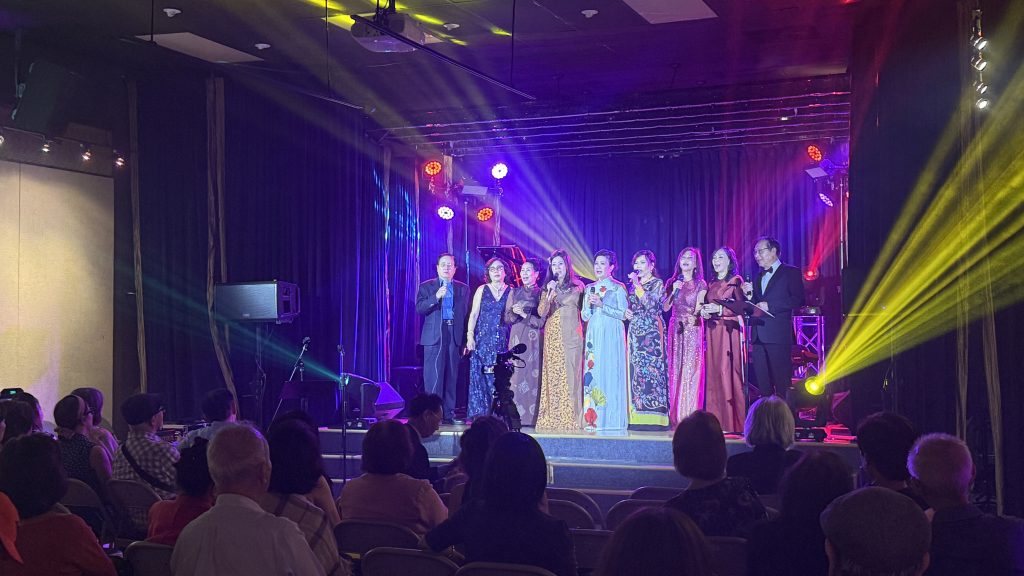
At “Gió Đông–Gió Tây Trong Âm Nhạc Việt,” presented by Nhóm Sắc Màu Kỷ Niệm at Người Việt’s community room in Westminster, Vietnamese and Western musical influences came together on one stage. The program showed how Vietnamese music can evolve while still preserving its soul.
What stayed with me most was seeing two of the youngest singers, both born in the United States, perform a Vietnamese song after three months of preparation. They sang for an audience largely from their parents’ and grandparents’ generations, creating a beautiful connection between the past and the future.
This is the kind of story Galaxy Marketing & PR wants to bring closer to the community. We help singers, cultural groups, and community organizations share the meaning behind their work, reach a wider audience, and receive recognition for their dedication.
If you are bringing people together through music and culture, Galaxy would be honored to help your story be heard.
Read the original article (in Vietnamese) here
Article Summary
“East Wind, West Wind” Connects Vietnamese Music with Western Melodies
“Sắc Màu Kỷ Niệm” group held a music program titled “Gió Đông-Gió Tây Trong Âm Nhạc Việt” (East Wind, West Wind in Vietnamese Music) at Người Việt’s community room in Westminster on Sunday, September 13, tracing how Vietnamese and Western music influenced one another.
The program walked the audience through the evolution of Vietnamese music, from traditional poetry and five-tone chanting to the New Poetry movement and foreign songs set to Vietnamese lyrics, which helped open the door for modern Vietnamese music to absorb Western influences while keeping its own language and spirit. Organizer Bích Thủy explained that “Gió Đông” (East Wind) represents traditional and Vietnamese music, while “Gió Tây” (West Wind) represents the Western influence early composers brought into modern Vietnamese music, a blend shown through foreign songs given Vietnamese lyrics and Vietnamese songs translated into English.
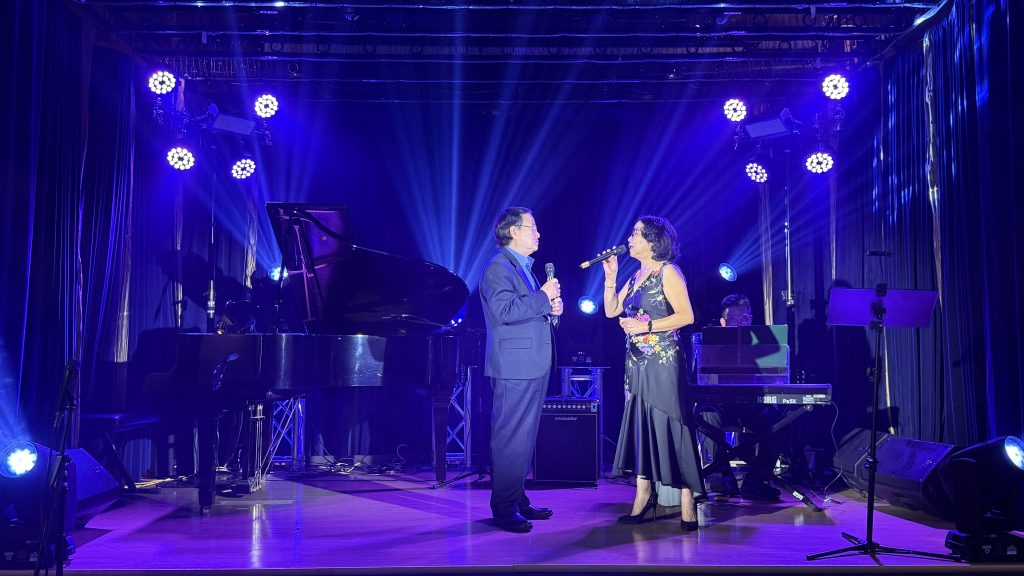
The group Cát Trắng opened with a medley of “Vó Câu Muôn Dặm” and “Dưới Nắng Hồng,” setting the tone before the program moved into autumn love songs and familiar foreign tunes. One of the most moving moments came when Bích Thủy sang “Người Về” by Phạm Duy, sharing beforehand that she’d changed her song choice at the last minute because of its emotional weight: after years away at war, a soldier’s greatest joy is returning to his mother, wife, and children, though a quiet space remains for the comrades who never made it home.
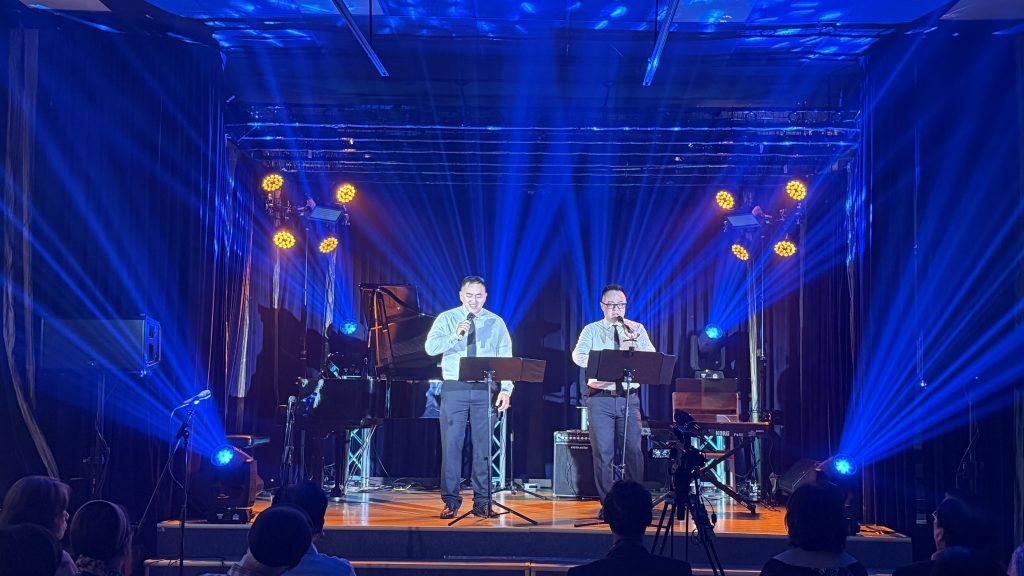
The program’s two youngest performers, Hoàng Tú and Vĩ Quang, both born in the U.S. but fluent in Vietnamese and devoted to Vietnamese music, spent three months preparing their first performance of “Greenfields” (“Đồng Xanh”) with a new arrangement by Hoàng Tú. They chose the song for its melody, familiar to many Vietnamese who left the country after 1975, hoping to carry the feeling of the song, a field tied to love and old memories, to the audience. Their presence also showed that Vietnamese music is still valued and carried forward by the next generation.
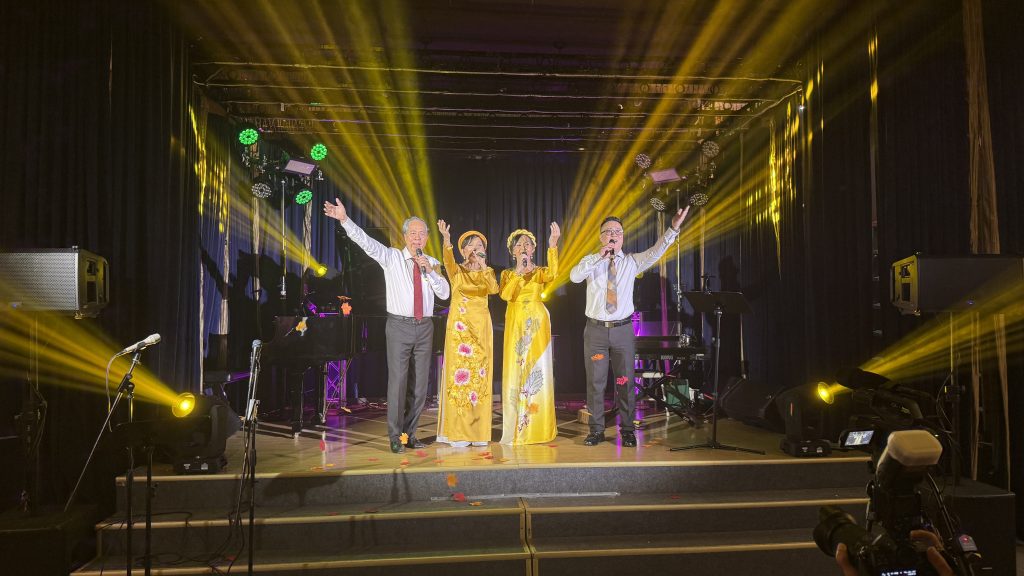
Tố Anh and Mạnh Lành followed with “Chân Trời Tím” by Trần Thiện Thanh, about longing to spend a lifetime with someone despite a love that never worked out. Corona resident Hằng Vũ said the song moved her deeply, noting that its lyrics about marital devotion give people in midlife a moment to pause and appreciate their partner.
The program shifted through many moods from there: Kim Loan brought a Japanese influence with “Hận Tình Trong Mưa” (“Koibito Yo”) by Mayumi Itsuwa; the quartet Hạ Vàng, made up of Ngọc Hương, Kim Nhung, Hoàng Tú, and Đỗ Thái, performed Cung Tiến’s “Thu Vàng” in both Vietnamese and English; and Ngọc Hương lifted the energy with “Tình Ca Du Mục” (“Those Were the Days”), popularized by Mary Hopkin, drawing an enthusiastic response from the crowd. Tố Anh brought listeners to the Danube with a Vietnamese rendition of “Giòng Sông Xanh” (“The Blue Danube”), while other performances explored the East-West theme further, including “Ständchen/Serenade” by Schubert sung by Phương Hạnh, “Autumn Leaves” (“Lá Vàng Rơi”) by Ngọc Hương in English and Vietnamese, “Parle plus bas” in French by Philippe Dương, and “Love Story” (“Chuyện Tình”) by Kim Nhung in English and Vietnamese.
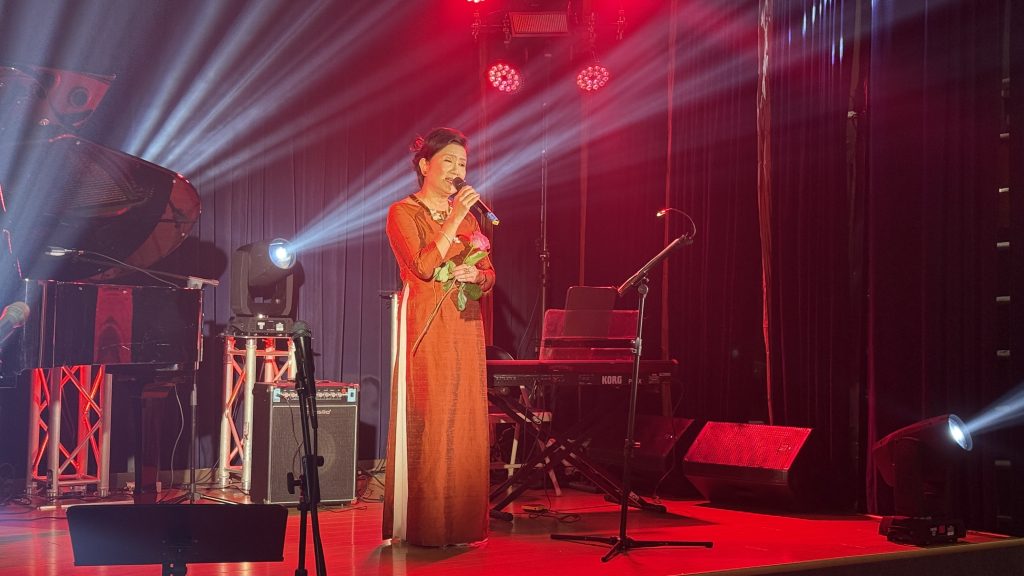
Tố Anh shared that “Mùa Thu Không Trở Lại” by Phạm Trọng Cầu always reminds her of a friend who passed away in the fall, and said a singer has to put their whole heart into songs with real depth, where “the music is poetry, and the poetry is music.” For her, singing is a way to serve the community, giving older adults a place to gather and connecting Vietnamese people abroad with their native language and old memories.
Mai Chi echoed that singing is a healthy activity that helps older members stay engaged with life, take care of their health, and prepare carefully before performing, while offering comfort and companionship to those carrying quiet burdens. Westminster resident Nguyễn Kim Thành, 87, said he and his wife regularly attend music programs in Little Saigon, and that the autumn love songs brought back many memories. He said these programs give seniors a place to gather and enjoy music together, adding of the organizers: “They probably love music even more than we do, the ones who came to listen.”


Leave A Comment